suppourt@courtaicac-hr.us
+1-888-282-2241
Contact Us
  • Home
  • Services
    • About The Court
    • Arbiters And Authority
    • Cases & Opinions
    • Legal status – Investigations and Locations:
    • Complaints & Arguments
    • Directory Of Members
    • H. R. Defenders
    • Documents & Stare Decisis
    • Filing & Rules
    • News Media
  • OUR BLOG
  • Us Federal Register
  • Contact Us
  • Home
  • Services
    • About The Court
    • Arbiters And Authority
    • Cases & Opinions
    • Legal status – Investigations and Locations:
    • Complaints & Arguments
    • Directory Of Members
    • H. R. Defenders
    • Documents & Stare Decisis
    • Filing & Rules
    • News Media
  • OUR BLOG
  • Us Federal Register
  • Contact Us
  • Home
  • Services
    • About The Court
    • Arbiters And Authority
    • Cases & Opinions
    • Legal status – Investigations and Locations:
    • Complaints & Arguments
    • Directory Of Members
    • H. R. Defenders
    • Documents & Stare Decisis
    • Filing & Rules
    • News Media
  • OUR BLOG
  • Us Federal Register
  • Contact Us
  • Home
  • Services
    • About The Court
    • Arbiters And Authority
    • Cases & Opinions
    • Legal status – Investigations and Locations:
    • Complaints & Arguments
    • Directory Of Members
    • H. R. Defenders
    • Documents & Stare Decisis
    • Filing & Rules
    • News Media
  • OUR BLOG
  • Us Federal Register
  • Contact Us

Category: CASES AND OPINIONS

CASES AND OPINIONS

Defensores de los Derechos Humanos en riesgo por las acusaciones y amenazas de las autoridades.

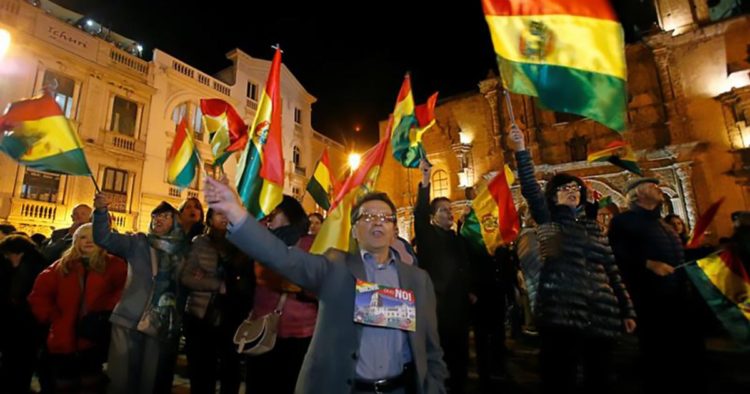
Hoy en Bolivia: Los defensores de los derechos humanos en riesgo por las acusaciones y amenazas de las autoridades.
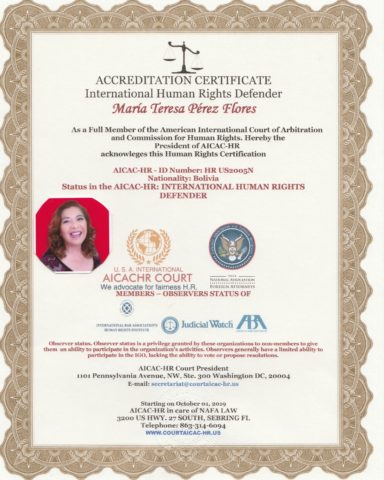
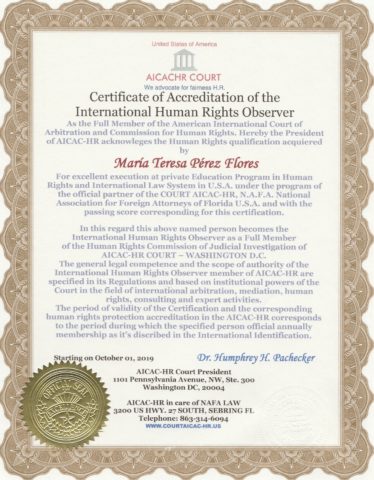
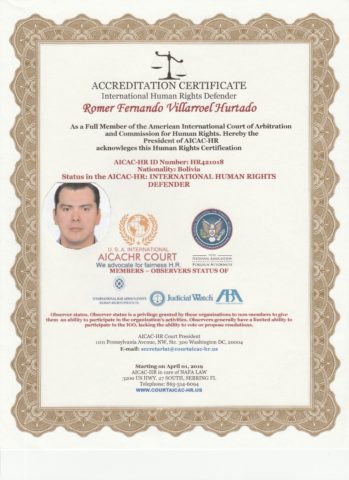
Las máximas autoridades gubernamentales de Bolivia, incluido el presidente Evo Morales y su ministro de gobierno, Carlos Romero, han acusado y amenazado públicamente a los defensores de los derechos humanos y a las organizaciones críticas con sus políticas, demonizándolos y obstaculizando su importante trabajo, dice Amnistía Internacional en un nuevo informe publicado. hoy.

El informe Bolivia: Hostilidad contra los defensores de los derechos humanos, presentado en el contexto del Examen Periódico Universal de Bolivia ante las Naciones Unidas, expone las tácticas intimidantes y estigmatizantes utilizadas contra los defensores de los derechos humanos y la consiguiente situación de riesgo y censura en el país, en un momento cuando el presidente Evo Morales busca un cuarto mandato en el cargo.

Citado: “Es lamentable que el presidente boliviano y sus propios ministros estén acusando y amenazando públicamente a quienes dedican sus vidas a proteger los derechos y libertades de los más vulnerables. El presidente Morales debería, en contraste, reconocer públicamente el trabajo de estas personas y garantizándoles un espacio libre y seguro para continuar su tarea de defender los derechos humanos, … ” “Amnistía Internacional “.

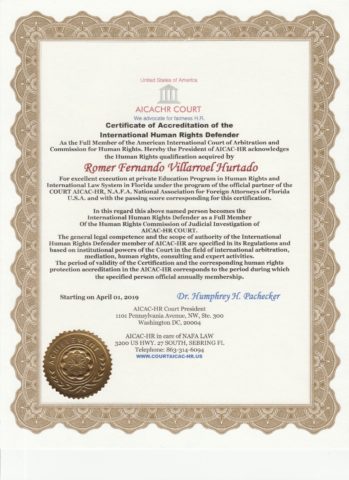
La Comisión Internacional de Derechos Humanos de la Corte AICAC-HR, Washington D.C., hace un llamado a sus abogados miembros Defensores para Bolivia- Dra. Maria Teresa Pérez Flores, y Dr. Romer Fernando Villarroel Hurtado, para que en sus funciones y en nombre de esta Comisión presenten una querella ante la autoridad de ‘Amnistia Internacional’ por abusos y violaciones agrediendo a nuestros colegas. Tomar acción entrando por este enlace aquí: https://www.amnestyusa.org/take-action/

LOS DERECHOS HUMANOS TE NECESITAN.

Ya sea que tengas cinco minutos, unas pocas horas o un poco más de tiempo, necesitamos que hables, se presente, participa y defiende los derechos humanos hoy. Entonces, arremángate y empecemos. Juntos, somos una fuerza poderosa que exige que se protejan los derechos humanos de todos.

Read More
admin@ November 4, 2019 0 Comments
CASES AND OPINIONS

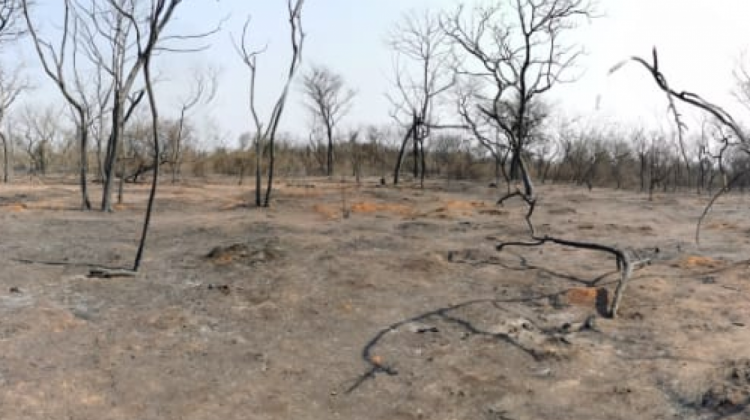
El fuego ha consumido miles de hectáreas amenazando también a más de 500 especies de fauna que habitan en esta zona. La emergencia se dio hace casi un mes y todavía se registran focos de calor…

El fuego ha consumido miles de hectáreas amenazando también a más de 500 especies de fauna que habitan en esta zona. La emergencia se dio hace casi un mes y todavía se registran focos de calor.

Honorable Consul Sr. Augusto Chassagnez

Consulate General of Bolivia

3750 NW 87th Avenue

Suite 240,

Doral, Florida 33178

Ph.: (305) 358-6303

Respetable Cónsul, reciba Usted nuestro respeto, saludos y admiración. Como una breve introducción, mi nombre es Dr. Humphrey Humberto Pachecker, CEO de “NAFA LAW”, ‘Asociación Nacional para Abogados Extranjeros’, igualmente, soy el presidente y comisionado general de la Corte Americana Internacional y Comisión de Derechos Humanos “AICAC-HR”, local Washington DC, y Sebring, FL.

Sabemos de sus múltiples obligaciones, por esta razón hacemos una breve introducción así radicando el tema principal y documentos de soporte.

Le solicitamos vuestra deferencia para hacerle llegar documentos radicados por nuestro abogado asociado y defensor internacional de los Derechos Humanos, el Dr. Romer F. Villarroel Hurtado de Bolivia. Para vuestra consideración hacemos presente una breve reseña del tema y, de ser posible solicitamos una audiencia para hacerle llegar a Usted estos documentos vía personal por medio de nuestro representante en Miami y Defensor de los Derechos Humanos, el Dr. Emilio G. Galán.

Favor de entrar por este enlace para ver detalles de este documentos: Mision Cumplida (1) BOLIVIA -ROMER

El tema radica en una carta abierta presentada por nuestro asociado Dr. Villarroel Hurtado vía Sra. Doña Blanka Monasterio R.,  activista internacional, carta dirigida al Presidente de Organización de las Naciones Unidas [ONU], imputando al Presidente de Bolivia, respetable Sr. Evo Morales por la destrucción en la quema de más de 5.000.000 millones de hectáreas de bosques de la Chiquintania Boliviana, considerada el pulmón del mundo.

Por este medio, haciendo una acción triple, de reclamo, solicitud y exigencia para que el presidente Sr. Evo Morales se pronuncie declarando desastre nacional permitiendo así la entrada de ayuda internacional.

Igualmente, solicitando en contingencia dejar sin efecto jurídico abrogando el decreto Supremo 3973 el cual da origen a las quemas ilegales en cuestión y otros argumentos paralelos en dicha carta abierta, Et Al.

Esta Institución- Corte AICAC-HR, adherida a la Asociación Nacional de Abogados NAFA LAW, apoya esta iniciativa del asociado y defensor internacional de los Derechos Humanos, Dr. Romer F. Villarroel Hurtado. Nuestro Principal Interés alude a una norma de actos cometidos por el gobierno de Bolivia los cuales creemos, y opinamos no tienen existencia jurídica dentro de los Derechos Humanos y el Derecho Internacional.

Una norma es válida cuando la podemos identificar como perteneciente a una acción jurídica, cuando existe un acuerdo con el Derecho. Y cuando contribuye a la protección y garantía de los derechos de sus ciudadanos como la dignidad de las personas que representamos.

Quedo atento a su grata respuesta.

Dr. Humphrey Humberto Pachecker

Correo electrónico: nafa@nafalaw.com


Read More
admin@ October 20, 2019 0 Comments
CASES AND OPINIONS

Han pasado 60 años desde que entró en vigencia la Convención de Nueva York en Sentencias Arbitraje Extranjero

Han pasado 60 años desde que entró en vigencia la Convención de Nueva York [http://www.newyorkconvention.org/ ] sobre el Reconocimiento y la Ejecución de Sentencias Arbitrales Extranjeras, una de cuyas disposiciones exige que el “acuerdo [arbitral] por escrito” conste en un “canje de cartas o telegramas”. Esta es una de las disposiciones que ejemplifican cómo ante el vertiginoso ritmo del desarrollo tecnológico en estas seis décadas, algunos de los cimientos del arbitraje y, en general, de los mecanismos de resolución de conflictos, requieren adaptarse a los nuevos tiempos. Uno de esos avances es la tecnología blockchain, que se discutirá en estas líneas.

En esencia, el blockhain consiste en un libro digital, abierto y descentralizado, cuyas copias idénticas se replican en un número plural de redes de computadores, en el que se registran transacciones de forma -en principio- irreversible e inmodificable. Se prevé que el blockchain, sobre el cual se fundan las criptomonedas, tiene potencial de aplicación en una amplia variedad de industrias, lo que generaría, a su paso, una verdadera revolución, en cuanto eliminaría significativamente múltiples costos de la transacción.

Una de las principales implementaciones prácticas del blockchain son los smart contracts, que pueden definirse como estipulaciones vinculantes para las partes expresadas en un código (lenguaje informático) inmutable que es autoejecutable: de cumplirse ciertas condiciones, el código se activa por sí mismo y genera efectos patrimoniales. Se ha dicho que, en la medida en que los smart contracts son autoejecutables, reducen el riesgo de disputas. Sin embargo, una gran parte de las relaciones jurídicas que se generen a través de estos mecanismos seguirán dependiendo de un factor humano en su cumplimiento, que, de por sí, no erradica las posibilidades de error.

Así mismo, es prácticamente imposible que se prevean ex ante todos los potenciales escenarios que un smart contract deba cubrir en el marco de una relación jurídica, quedando cierto margen de incertidumbre en este tipo de actos jurídicos. En consecuencia, seguirá siendo necesario contar con mecanismos de resolución de conflictos efectivos.

Jurisdicción y competencia

Una cuestión fundamental es si las disputas relativas a relaciones jurídicas entabladas en el marco de blockchain podrían ser llevadas ante la jurisdicción. La respuesta prima facie es afirmativa, sin embargo, ventilar este tipo de disputas ante cortes nacionales tiene importantes dificultades. Dos interrogantes elementales son (i) qué corte es competente y (ii) cuál es el derecho aplicable.

En la práctica, los usuarios de blockchain actúan anónimamente o bajo seudónimos y realizan sus transacciones desde diferentes partes del mundo. En virtud de lo anterior, las leyes en materia de conflictos de leyes y de jurisdicción se quedan cortas, puesto que, en muchos casos, ni siquiera puede establecerse con exactitud la ubicación de las partes, ni mucho menos de los “bienes” objeto de la disputa.

Es ilustrativo el caso Copytrack Pte Ltd. v. Brian Wall[1], de la Corte Suprema de British Columbia (Canadá), en el que una compañía de Singapur que había creado una criptomoneda transfirió por error al demandado cierta cantidad de una criptomoneda diferente a la que ofrecía, y el demandado se rehusó a restituirla tal y como se la habían desembolsado.

La Corte se abstuvo de pronunciarse sobre si las criptomonedas objeto del litigio eran jurídicamente “bienes”, y profirió una orden garantizando el derecho del demandante a rastrear y recuperar las criptomonedas, en manos de quienes pudieran estar. No obstante, en los términos en que fue dictada la sentencia, es inejecutable, ya sea porque la criptomoneda pudo haber sido transferida a un destino desconocido, o porque, aún si su destino fuese conocido, la reversión de las transacciones sería impracticable, puesto que requeriría alterar todos los ejemplares existentes del blockchain, lo cual implicaría un consenso prácticamente imposible de lograr entre todos quienes tengan acceso a su administración.

Mecanismos de solución

Casos como Copytrack han llevado a argumentar que el arbitraje debería ser por excelencia el mecanismo de resolución de disputas derivadas de relaciones surgidas del blockchain. Entre las bondades del arbitraje, se afirma la posibilidad de acordar la ley aplicable, la sede, el procedimiento aplicable, la confidencialidad, la experticia de los árbitros en la materia y, también se afirma, la posibilidad de obtener el reconocimiento y ejecución del laudo vía la Convención de Nueva York. Sin embargo, parece prematuro ser categórico en que todas estas bondades del arbitraje tengan aplicación efectiva en disputas relacionadas con blockchain.

Surgen dudas respecto de diferentes aspectos. A título simplemente ilustrativo, ¿cumplen los smart contracts con el requisito de consentimiento “por escrito” estipulado bajo la Convención de Nueva York? ¿surgirán objeciones en cuanto a la arbitrabilidad de las disputas derivadas de este tipo de contratos? ¿cómo garantizar la efectividad de un laudo arbitral ante partes anónimas, sobre “bienes” difíciles o imposibles de rastrear? o, sin ir más lejos, ¿cuál es la legitimidad de un mecanismo de resolución de disputas enclavado dentro de un sistema que, a su vez, se cimienta sobre una descentralización prima facie absoluta y que impactaría su inmutabilidad?

Una respuesta ha sido la implementación de mecanismos de resolución de conflictos “autocontenidos” en el ecosistema blockchain. Las características “institucionales” de estos mecanismos varían: en algunos casos, se prevé un grupo de árbitros dentro del propio sistema del blockchain que se trate, en otros, las disputas son sometidas ante una entidad independiente, pero también descentralizada.

El funcionamiento de algunos de estos mecanismos también es novedoso. Por ejemplo, en algunos casos se garantiza que tanto la identificación de las partes como de los árbitros permanezca en el anonimato. Ante el surgimiento de disputas, algunas estipulaciones prevén que una de las partes tiene la prerrogativa para que se “congele” la ejecución, caso en el cual se designará a un panel arbitral para que decida cuál de las partes tiene la razón. Una vez proferida la decisión, se decide la destinación de las prestaciones de que se trate a la parte victoriosa. Son sistemas con mínimas o nulas injerencias gubernamentales o institucionales.

Con todo, han surgido cuestionamientos -especialmente desde sectores que defienden de forma más recalcitrante la descentralización del blockchain– en cuanto a la legitimidad de los sistemas de resolución de disputas. Estos cuestionamientos plantean una paradoja: ¿es el blockchain, como algunos lo han planteado, una oportunidad de surgimiento de una nueva lex mercatoria, en la que los usuarios del blockchain terminarán por perfeccionar un sistema de resolución de conflictos legitimado en sí mismo y alejado del poder estatal? O, por el contrario, ¿para que un mecanismo de resolución de disputas resulte efectivo, requerirá una fuente de legitimidad exógena que lo soporte? Algunos proyectos de ley para regular el blockchain en países como EE UU, en el sentido de cubrir estas tecnologías bajo el manto estatal, parecen sugerir esto último, pero es muy pronto para ser conclusivo.

Incluso, algunos se atreven a ir más lejos y ante el vertiginoso desarrollo de la inteligencia artificial señalan que uno de sus usos estaría precisamente en el campo de la resolución de disputas sin intervención humana, a lo que parte de la comunidad científica internacional ha reaccionado incluyendo dentro de los Principios de Asilomar, uno referido a la transparencia judicial, en virtud del cual las decisiones judiciales tomadas a partir de algoritmos deben proporcionar una explicación satisfactoria que pueda ser auditable por una autoridad humana. En fin, lo cierto es que muy seguramente no tendremos que esperar otros 60 años para encontrar las respuestas a estos interrogantes.

Julio César González Arango.

Socio del Área de Resolución de Conflictos de Philippi Prietocarrizosa Ferrero DU & Uría.

Santiago Cruz Mantilla

Asociado Principal del Área de Resolución de Conflictos de Philippi Prietocarrizosa Ferrero DU & Uría.

[1] Copytrack Pte Ltd. v. Wall, 2018 BCSC 1709.

[2] https://www.taylorvinters.com/article/blockchain-dispute-resolution-a-better-alternative-for-the-decentralised-world

[3] https://www.congress.gov/116/bills/hr528/BILLS-116hr528ih.pdf

[4]  https://futureoflife.org/ai-principles/  (Asilomar IA Principles)


Read More
admin@ October 19, 2019 0 Comments
CASES AND OPINIONS

Surprising notice issued by the AICAC-INTER.US Court, titled: “ATTENTION: IMITATORS! BE CAREFUL!


“Competition has been shown to be useful up to a certain point and no further, but cooperation, which is the thing we must strive for today, begins where competition leaves off.”  Franklin D. Roosevelt

&&&&&&&&&&&&

Competition, imitation or growth with innovation in a new Spanish-speaking markets ignored and therefore available to compete.

Is competition or imitation in a service market good or bad for growth?

This question is addressed in the context of a surprising notice issued by the AICAC-INTER.US Court, titled: “ATTENTION: IMITATORS! BE CAREFUL! Quoted in this link: https://court-inter.us/node/45393

This statement on the Website of: COURT-INTER.US, does not pass the Fact-checking test. Not having enough factual assertions in order to determine the truth and correctness of the factual statements in the text post hoc, which it has been published and otherwise disseminated.

There is no imitation when the Spanish-speaking market is available, open and without competition.

It is admitted by all, that mere words without meaning have no basis. For example, in competitions between universities and educational institutions, the repetition of programs, their characteristics, similarities and duplicates cannot be classified as “imitation”, especially when there is an open market with a certain amount of totally unoccupied space in it and, which is not occupy any other institution, specifically the Spanish-speaking market.

There are no monopolies if they innovate, here we find first, the usual effect of clean competition in the Spanish-speaking professional services market exceeded by the greater incentive for the innovative institution to escape non-existent competition in Spanish-speaking regions, so that it has a positive effect on growth; second, that, in case of a small imitation, growth almost always improves, since it promotes more frequent and clean competition, but too much imitation unequivocally reduces growth. The model thus points to complementary roles for competition policy (antitrust) and patent policy.

As AICAC-INTER.US correctly announces in its September, 2019 surprising notice cited above: ‘in June 2019 a new organization named “The American International Court of Arbitration and Human Rights Commission” (AICAC-HR) appeared’. And they, AICAC-INTER.US, alleged that, and we quote here: “The name of this structure is surprisingly similar to the name of our Court and actually duplicates its abbreviation.”

But in this statement certain irrefutable factors better detailed in mails exchanges below beginning in December, 2018 between AICAC-INTER.US and HUMPHREY H. PACHECKER registered founding owner of AICAC-HR, and partner of AICAC-INTER.US, these facts have been omitted in said AICAC-INTER.US surprising statement.

In these mails exchanged between HUMPHREY H. PACHECKER, and the Secretary General of AICAC-INTER.US, Mr. ANATOL TIM, and, the President of AICAC-INTER.US, Mr. Borys Zhytnigor, the evidence clearly demonstrates that HUMPHREY H. PACHECKER made several attempts to negotiate to take control of AICAC-INTER.US in the United States, in order to assume 50% of all actions and shares. This negotiation took place immediately after these senior officials of AICAC-INTER.US publicly notified in writing to HUMPHREY H. PACHECKER, and also announced to all their members- that AICAC-INTER.US, would cease all functions- fully in the United States- terminating all services to all its members and functions including its partnership with Humphrey H. Pachecker. Indeed, after the negotiation attempts between both parties failed, AICAC-INTER.US stopped working- first by canceling its Web pages, canceling its emails addresses and canceling its legal status; And finally in the date of January 6, 2019 6:14 p. m. Closed. The president of AICAC-INTER.US Mr. Borys Zhytnigor, wrote a final email to HUMPHREY H. PACHECKER announcing that it has ceased and closed all communications and negotiations, as this can be seen in the 15 correspondence emails exchanged as evidenced here below.

Now, in the 13th day of the month of September, 2019, eight [8] months after AICAC-INTER.US closed and ceased all activities and all communications in the United States, the Secretary General Mr. Anatol Tim, sent an email dated September 13, 2019 [see it below] in which he notified HUMPHREY H. PACHECKER, that ‘they’ are reopening the services of AICAC-INTER.US in United States, after of being eight [8] months out of service, out of the jurisdiction and out of all contact. We must note that, AICAC-INTER.US has its origination, according to the partnership documents, in United Kingdom and in Ukraine.

In this aforementioned email the secretary general informed us and I quote it here: Mr. HUMPHREY H. PACHECKER “I hope you are well now. During the past year, as you know, we had certain problems The group of our organizations has changed the owners of corporate rights. For a while we didn’t work. For a while we didn’t work”…

“The founders decided to end the activities of the Court. But at the last moment we signed a contract to accompany a very large transaction. As a result, we continue our work”  … Sep 13, 2019 at 5:52 AM. See full mail below.

&

On the same day, Sep 13 at 1:45 PM, HUMPHREY H. PACHECKER, answered said email of the Secretary General, in an open statement letter, partially quoted it here:

Dear Anatol Tim

The AICAC Secretary General

Greetings, it is good to hear that your institution is back in business- and again approaching others for better future.

After you and the president of your Institution rejected all my proposals to be part of your institution confirming your decision to ceased all business and services of your institution in USA, I created a similar Institution beginning in June 2019 in Washington DC. This one is under the name of AICAC-HR, “American Court of Arbitration and Commission for Human Rights” See it here: http://courtaicac-hr.us/ see full mail below.

&

Next day Sept 14 at 1:54 the Secretary General responded to HUMPHREY H. PACHECKER, partially quoted it here:

secretariat@court-inter.us <secretariat@court-inter.us>

To: Nafa Unpam

Sep 14 at 1:54 AM

Dear Mr. Humphrey H. Pachecker,

The AICAC welcomes your independent initiatives. And we wish you success.

I remind you that the founders of the Court rejected your proposals only because they were economically unprofitable and legally doubtful (we are sure that you yourself understand this).

In addition, we could not give the rights to administer the Court to a partner who owned only 5% of corporate rights. Any lawyer and entrepreneur will say that this is absurd. Much more funds have been invested in the activities of the Court than you suggested. So, I hope you have no real reason to be offended. As a result, investors joined us who acquired corporate rights for several hundred thousand dollars.  This money was paid immediately and in one payment. You probably understand that these investment conditions are more favorable than yours. We see that in your organization you not only use many AICAC developments, but also use our abbreviation. I want to note that the Court did not legally terminate its activities and did not transfer its rights to anyone, including copyright. Therefore, such a borrowing is unlawful …. see full mail below.

&

On the same day September 14, 12:02 PM, HUMPHREY H. PACHECKER responded to the Secretary General, partially quoted it here:

From: Nafa Unpam-wrote

To: secretariat@court-inter.us>

Sep 14 at 12:02 PM

Mr. Anatol Tim, greetings. Thank you for your reply mail, and good wishes for future successes.

I agree that for your organization, partners who contribute thousands of dollars quickly is more convenient for your organization than the offer submitted by me. Therefore, I do not take any offense for your business decision by denying my proposal.

But, my offer to conquer the Spanish-speaking market with new service proposals is also to be considered of great value, which I explain here below. In these proposals, it must be considered that our thousands of contacts, with 25 years of services within the Hispanic market and with the professional community of Spanish speaking, have an incalculable value for these services proposed here below …. see full mail below.

&

Conclusion:

AICAC is not subjected to copyrights protection.

AICAC is an acronym, same as NAFA is another acronym. These are abbreviations formed from the initial letters of other words and pronounced as a word (e.g. ASCII, NASA ).  Examples:

AICAC- “American Injury Compensation on Appeal Commission”;

NAFA- “North American Flyball Association”.

Any and all acronyms, single words and short phrases are not subject to copyright protection. Trademarks are indicators of the source or origin of goods or services. Conceivably you could use a few of the acronym phrases as trademarks for a business. But stand-alone phrases are not eligible for trademark protection. And these may be offered as advertising or marketing ideas to potential customers.

Names, Acronym, Titles, Short Phrases [Copyright Laws- https://www.copyright.gov/circs/circ33.pdf] “Words, acronyms and short phrases, such as names, titles, and slogans, are uncopyrightable because they contain an insufficient amount of authorship. The Office will not register individual words or brief combinations of words, even if the word or short phrase is novel, distinctive, or lends itself to a play on words. Examples of names, titles, or short phrases that do not contain a sufficient amount of creativity to support a claim in copyright include: • The name of an individual (including pseudonyms, pen names, or stage names) • The title or subtitle of a work, such as a book, a song, or a pictorial, graphic, or sculptural work • The name of a business or organization • The name of a band or performing group • The name of a product or service • A domain name or URL • The name of a character • Catchwords or catchphrases • Mottos, slogans, or other short expressions.

The Secretary General of AICAC-INTER.US Mr. Anatol Tim, and President Mr. Borys Zhytnigor, in the first week of January, 2019 rejected all the various offers made from HUMPHREY H. PACHECKER to take control of AICAC-INTER.US. In the mail dated January 5, 2019, they clearly announced informing HUMPHREY H. PACHECKER that they have decided to close all the services, functions of AICAC-INTER.US, and I quote it here: “We decided to close the Court and therefore we will not pay corporate tax this year [2019] (we always paid the tax in February), the domain name of the site and hosting….” see rest of this mail below.

With this decision, the Secretary General of AICAC-INTER.UR Mr. Anatol Tim, and President Mr. Borys Zhytnigor, in the first week of January, 2019, abandoned all relations with HUMPHREY H. PACHECKER, abandoned all relations with NAFA LAW, also abandoned any and all relations and all  its obligations and commitments created with all its Human Rights Defenders members, likewise abandoned all relations and obligations with the International Arbitrators, all these people were AICAC-INTER.US members by means and mutual promises offered by AICAC-INTER.UR via NAFA LAW. Some of these International Arbitrators paid to the Secretary General Mr. Anatol Tim, and the President Mr. Borys Zhytnigor via AICAC-INTER.UR- One thousand one hundred five dollars per each person [$1,105.00], and equally- all International Human Rights Defenders paid the Secretary General Mr. Anatol Tim, and President Mr. Borys Zhytnigor via AICAC-INTER.US, one hundred five dollars per person [$105.00] thus leaving abandoned the commitments guaranteed by AICAC-INTER.US through NAFA LAW to all these people. Hence, causing great burden forcing HUMPHREY H PACHECKER, to seek a solution in guarantee of the honorability, ethics, and commitment of HUMPHREY H. PACHECKER and NAFA LAW assured to and created with all these people for the commitment and guarantee offered by the Secretary General of AICAC-INTER.US Mr. Anatol Tim, and the President Mr. Borys Zhytnigor via AICAC-INTER before abandoning the property, the commitments and obligations. Abandoned property refers to the property to which the owners have relinquished all rights. The person taking possession of the abandoned property is entitled to keep it without violating the Fourth Amendment to the U.S. Constitution.

SEE IN CHRONOLOGICAL ORDER here below all 15 correspondence emails exchanged in the month of January, 2019 between the Secretary General of AICAC-INTER.US Mr. Anatol Tim, and President Mr. Borys Zhytnigor via AICAC-INTER, and HUMPHREY H. PACHECKER via NAFA LAW.

************

Correspondence Emails #-1 of 15

On Wednesday, January 2, 2019, 10:12:52 PM EST, Borys Zhytnigor  wrote:

Dear Mr Humphrey H Pachecker,

This is the confidential e-mail of the President of the AICAC, which I use in special cases at his request.

Thank you for your interest in cooperation.

You are one of our most active partners. Therefore, I will explain to you the current situation.

The AICAC was established in 2011. The founder and owner of the Court is the International Union of Commerce and Industry (IUCI; London, UK).

The purpose of the Court was to accompany the international commercial contracts of a large international holding company that united the enterprises of the USA, Brazil, China, Great Britain, Western and Eastern Europe. The main incomes the Court received from abroad.

Therefore, we registered the AICAC in Delaware.

This US state has simplified registration procedures, low corporate taxes, and foreign income is exempt from taxes.

In 2014, all international contracts of the holding were fully implemented. The Court fulfilled its mission: it ensured the implementation and legal protection of commercial contracts.

However, we decided to continue the activities of the Court. Over 8 years of work, the Court considered 87 arbitration disputes and implemented 22 mediation procedures, provided international legal services.

But in 2015, the number of our employees and representatives in the United States was significantly reduced. The expenses of the Court’s activities were also reduced.

We have closed offices in the USA. The number of arbitration procedures has decreased dramatically. Since 2017, all the leaders of the Court are outside the United States.

Since that time, the AICAC has finally ceased to generate income, while the costs of its maintenance have remained unchanged.

We understand that for the successful work of the Court, it is necessary, at a minimum, to have offices and managers in the USA, to be active in this country.

Previously, we had many representatives in America, and now there is only one person who prepares documents in the United States.

The Court has a specific history – it considered many confidential disputes between certain international corporations.

Therefore, we can not sell the AICAC to the new owner.

It is necessary to keep continuity, legally support the previous decisions and positive reputation.

We did not have a reliable partner to whom we could transfer the management of the Court. Therefore, we decided to close the AICAC.

If you are really interested in continuing the activities of the Court, we are ready to offer you to purchase a share (part of corporate rights) of the Court in the amount of 10 to 50%. For a symbolical payment: $1000 for 1%.

You have the right to involve any investor in this process.

If you (your organization or your representative) receive from 10 to 50% of the rights to the Court, you will also receive the post of First Vice-President of the Court. You will also have the same percentage of votes in the Board (Directorate) of the Court. The same amount will have your share in the profits of the Court.

In addition, you will fully manage the activities of the Court in North and South America. You will officially represent the Court in the United States.

The website of the Court will contain the addresses and phone numbers of your offices.

You will be given the stamp of the Court. You will receive the right to sign documents and execute contracts. Such documents will enter into legal force after the approval of the President and publication on the official website.

In addition, you will offer candidatures of qualified lawyers for grant them (paid and free of charge) the status of an arbitrator, mediator or human rights defender.

If you acquire exactly 50% of the rights, you will get the position of the President of the Court, you can use the Court’s bank account (You will have the same right to access a bank account as our personal representative in the USA). In this case, all decisions will be made exclusively with the mutual consent of both parties.

A required condition: not to allow a conflict of interests and honestly declare your interests.

The director of the IUCI and the President of the AICAC is the same person (B. Zhytnigor).

Therefore, the solution of all issues and paperwork does not take much time.

We are sure that all the indicated amounts are not large (for business) and should only confirm the seriousness of the intentions of the co-owner of the Court.

Such we see the possibilities of preserving of the Court. In another case, we will not support the activities of the AICAC and incur additional costs.

Thank you for your attention and hope for your understanding of the situation.

Regards, Anatol Tim

&

Correspondence Email #-2

On Thursday, January 3, 2019, 5:31:37 PM PST, Borys Zhytnigor wrote:

Dear Mr Humphrey H Pachecker,

Thank you for your prompt response and frank statement about your interests.

We also thank for the principled desire to continue to cooperate with the Court not only as a partner of the Court, but also as its shareholder and administrator.

We have always highly appreciated your initiatives, enthusiasm and activity.  And ready to support your actions in the future.

But there are several serious circumstances that are important to us and require discussion. Business is business.

  1. We are ready to offer the position of the First Vice-President and broad administrative rights to the co-owner of the Court (the owner of a part of corporate rights). We cannot and do not want to invite a hired manager to this position.

Therefore, it is important that the First Vice-President of the Court owns (personally or through third parties – its representatives) a significant part of the corporate rights of the Court. This not only corresponds to the customs of business turnover, but also imposes additional responsibility on the manager.

Thus, the manager (and owner) will take actions that will not harm his own reputation and assets, as well as the reputation and assets of other owners and the Court itself.

We believe that the minimum permissible share for this is 10 percent. This share also provides the optimal number of votes at Board meetings.

Therefore, it is important that such a share be acquired by you as soon as possible.

A monthly payment of 1 percent is a very long procedure. The rest of the amount on your proposal, indeed, can be paid in 2020.

We understand that this may be inconvenient for you, but it would be right and acceptable for us.

  1. Payments cannot be made to the Court’s bank account. Because the buyer must pay the money to the seller, and not the goods. This money cannot become the property (profit) of the Court.

You need to pay to a personal bank account of Borys Zhytnigor (the bank is outside the US).

Such conditions will be fixed in the contract.

Borys Zhytnigor has registered the Court singly and on his own behalf. But in the Charter of the Court Borys Zhytnigor stated that the founder of the Court is the IUCI.

This procedure for registering of the Court was quick and inexpensive. If a foreign (British) company directly created the Court, such a procedure would be quite complicated.

  1. In other regions, we can create branches and official representative offices.

In the future, all questions can be discussed and make a collective decision. However, all decisions of the Court on arbitration disputes, we always formalized in the state of Washington.

  1. The sale of corporate rights to you (or your organization) will be executed with the following documents and attributes:

1) The contract for the transfer of corporate rights that will be issued by the IUCI (represented by the Director of Borys Zhytnigor) and personally by Borys Zhytnigor (on its own behalf);

2) The decision of the Board (Directorate) of the Court on the appointment of the First Vice-President and inclusion in the Board of the new co-owner of the Court;

3) The order of the President of the Court, indicating the list of rights and powers of the First Vice-President;

4) The power of Attorney from the Court (represented by the President) with the list of rights and powers of the First Vice-President;

5) Placing information on the official website of the Court;

6) The package of personal documents of the First Vice-President;

7) The official stamp of the First Vice-President.

All project documents will be provided to you for review in electronic form. And then the documents will be drawn up and provided to you in the form of official paper documents.

Regards, Anatol Tim

&

Correspondence Email #-3

On Friday January 4, 19:14, Nafa Unpam wrote:

Dear colleagues Anatol Tim and Borys Zhytnigor, receive my cordial greetings.

Thank you for the trust placed in me by sharing internal information of the AICAC Court and its important trajectory.

I accept the proposal to assume 50% of the rights of AICAC, first for vice president and eventually to become the president for the entire American continent and the Caribbean.

This acceptance will be subject to the following conditions which are honorable, ethical, and I consider that these can also be fruitful for all.

First. In the documents for this negotiation it must be detailed that the purchase of 50% of the shares will be made in the following way:

Beginning this January 2019, I receive ten [10%] percent, in intervals of one [1%] percent each month making a deposit in the AICAC bank account monthly for one thousand [$1000] dollars per month. The last deposit will be made in the month of October 2019, or earlier at my discretion.

Then, in the month of January 2020, I will deposit the amount of twenty thousand [$20,000] dollars, and followed in the followed in the month of June 2020 I will make a final deposit of twenty thousand [ 20,000] dollars, to complete the total of fifty thousand [$50,000] ] US dollars.

These timeframes will allow NAFA UNPAM to work with AICAC to implement new programs of various services and international academic training, to serve the whole world.

Second. These new programs are the following:

The theme and practice in Human Rights of the Immigrant is one every day more critical, latent and the crisis is urgent, not only in the USA but also in Europe and many parts of the world.

NAFA, since last November, launched a propaganda program offering Master’s training in Human Rights for Immigration. We have received responses of international interest from several countries of the American continent. See details here: (1) http://nafalaw.com/blog/2018/11/09/como-convertirse-en-un-representante-proveedor-autorizado-de-servicios-de-inmigracion/

To this end, yesterday when I received your reply email, I immediately bought a domain name, www.courtaicac-hr.us  This website will be linked to the websites of AICAC, NAFA, and UNPAM.

On this site, certified HR defenders, lawyers, and organizations may file complaints, motions, and requests for mediation only on the subject of Immigration, mediation may be between the requesting parties the petitioner and the government. This service will have a fee, filing fee, as is required in any court around the world. We will be in direct contact with embassies, consulates, governmental authorities, and domestic and international civil institutions related to all matters concerning Immigration, including the US federal jurisdiction on Human Rights. See details here:(2) http://nafalaw.com/blog/2015/08/08/u-s-immigration-and-human-rigths-violations-%E2%80%93-inmigracion-a-ee-uu-y-violaciones-de-derechos-humanos-2/

NAFA has the correct infrastructure and staff to successfully run this program. We have offices and lawyers in the State of Washington DC, Puerto Rico, and in Florida. We will be the first  American International Arbitration Court for Immigration, for which herein I predict future successes.

Third. Another program which is already known to NAFA, but new to AICAC, is the program of providing services for the US state and federal government.

Since 2000, NAFA is an authorized vendor for the government of Florida. Monthly we receive job offers to apply to provide  our services for the government of the State of Florida in the form of solicitation.  Services in several areas, ranging from education, to commerce. NAFA has already served the state of Florida in the adult education branch. This through a program since 2000 called “Vocational Rehabilitation” in which people, permanent residents, and US citizens, who seek to obtain training to work in legal services, these are referred to NAFA. The government pays for these services directly to NAFA and the payments are punctual. See details here:(3) https://vendor.myfloridamarketplace.com/vms-web/spring/vrsexistingvendor?execution=e2s1

Other international programs can be implemented as we move forward with these new programs and others already established before.

If necessary NAFA can register AICAC in the State of Washington DC, under a figure in the corporate law called, “Alien Business Organization” Is a registration and certificate designating place of business or domicile for the service of process within the State, naming an agent upon whose proccess may be served. Our WA attorney can be the registered agent required by law.

Likewise, NAFA can pay for the annual corporate renewal of the AICAC Corporation in DE.

If all this is in agreement with you approval, then please send me the documents required to formalize and execute this agreement immediately and I will make the first payment of ten payment in the amount of one thousand dollars [$1000] each.

I’ll look forward for your answer. Best regards, HHP

&

Correspondence Email #-4

January 5, 2019 – 00:58, From: Nafa Unpam

To: Anatol Tim

Greetings, dear Mr. Anatol Tim and Mr. Borys Zhytnigor.

Thank you for your email. I, together with NAFA, am aware of the allegation that you have related to the longevity of payments in my proposal. I also recognize the importance of maintaining a good reputation, but to maintain this it is necessary to keep AICAC active in the United States.

If you allow AICAC to be dissolved in the USA, all possible future business opportunities disappear. The business opportunities are many and good for this year 2019 and, through AICAC you will also be the first beneficiaries, therefore your cooperation in this negotiation is necessary.

I am willing to increase the initial payment to the amount of two thousand dollars [$2,000], and then eight monthly payments of one thousand dollars [$1000] each; but this does not mean that I cannot ‘accelerate’ this by advancing payments earlier than scheduled. It all depends on how I can get the collaboration and can achieve progress in the various projects now in my future agenda for NAFA – AICAC, including important international institutions, universities and law schools in the USA.

The expenses to implement these projects and achieve some success in USA, the expenses of NAFA and UNPAM are many, but it is worth doing, of course I must minimize the risks.

At this moment, I still do not know if AICAC has any debt inside the USA, possible debt of taxes, etc. I have been able to contact the Department of State, Corporations in the state of Delaware, as you can see here below, it does not show that the AICAC LLC corporation has been, or has not been, renewed with its annual report. But this is the least important detail, because this corporation has to be amended in case we make the agreement.

Best regards, looking forward to you answer. HHP

&

Correspondence Email #-5

On Saturday, January 5, 2019, 6:18:23 PM PST, Borys Zhytnigor wrote:

Dear Mr Humphrey H Pachecker,

Thank you for the active and interesting discussion. But I have to confirm that we are not interested in continuing the work of the Court.

And, I hope, we will maintain good relations and will no longer discuss this topic.

I just set out our arguments for your information.

In our opinion, we formulated very simple and accessible, as well as fair conditions for the preservation of the activities of the Court.

The price assigned for corporate rights is incredibly low. And we do not consider it necessary to bargain about this. And, in general, the problem is not money. But I think that any normal person will not distribute his property for free.

In case we accept your offer, our potential risks will be significantly higher than the possible positive effect.

We do not want to offend you personally. We have only good impressions about cooperation with you.

But we are talking about business. And business requires attention to all circumstances. We do not want problems.

Our risks:

  1. Excess of authority

A manager may exceed his authority. He can make transactions on behalf of the Court when he does not have the right to perform such actions. Such violations are possible, even if there is a rule that any decisions of the Vice President must be approved by the President. The President may not be aware of such actions, and contractors may not be aware of the restrictions. At the same time, the negative consequences of illegal actions will arise from the Court, and not from the manager. The Court is responsible for the actions of its manager. If the manager is not a co-owner of a significant share of the Court (the owner of corporate rights), he can act irresponsibly.

For example, you are now registering some domain names on the Internet. You also talk about the need to change the form of the Court. And don’t even ask our opinion about it.

  1. Lack of control

We will be the owners of absolutely most of the corporate rights to the Court. But we will not be able to effectively monitor the activities of the Vice-President of the Court in the United States. This is an objective reality.

  1. The doubtfulness of projects

Sorry, but your projects must be reviewed and approved by the Board of the Court. This is done in all normal companies. For us, these proposals are not yet clear.

  1. Conflict of interests

The manager always has the opportunity to act on behalf of the Court, and receive income from these actions to the bank accounts of other companies.

  1. Confidentiality

The Court considered arbitration cases worth hundreds of millions of dollars. This is confidential information. The archive is a trade secret. But the information may appear in the statements of interested persons and otherwise.

There is a risk of spreading confidential information.

  1. The logic of corporate law

Persons who own a controlling share of corporate rights always manage companies. It is impossible to dominate in a company with a share of 2, 10 or 30 percent of corporate rights. This is not only not logical, but not legal.

This is our position. I repeat once again: we do not want to offend you, do not accuse or suspect you of anything. We are talking about risks.

A few other comments.

  1. a) In the past three years, the Court has not considered arbitration disputes in the United States. Disputes were dealt in our branches in Singapore, Austria and Russia (all of these branches have already been closed). Revenues in the United States were negligible.

  2. b) We decided to close the Court and therefore we will not pay corporate tax this year [2019] (we always paid the tax in February), the domain name of the site and hosting.

Thank you for your attention and understanding. We sincerely wish you good luck!

Regards, Anatol Tim

&

Correspondence Email #-6

From: Nafa Unpam To: Borys Zhytnigor

Cc: Dr.humphrey Humberto Pachecker

Sent: Sunday, January 6, 2019, 1:15:41 PM PST

Subject: Re: SECOND REPLY TO AICAC. ATTN. MR. ANATOL TIM

Greetings dear Mr. Anatol Tim and Mr. Borys Zhytnigor.

The respect is mutual and, in addition I have admiration for your achievements, ethics and professionalism.

I believe that in our business the importance and respect in communication in any negotiation process are fundamental. If at any time my vocabulary and monetary offers have offended your honor, I assure you that it is an error of interpretation. I have seen everything from a commercial point of view, and as you mentioned before, business is business.

In my opinion it would be a mistake to think that the victory in this negotiation is in reaching the win-win situation. At all times I have acted with the best interest to achieve mutual benefits for AICAC and NAFA LAW, always observing the high concepts of ethics and good reputation and, based on these principles, we will maintain good relations.

Your arguments are clear and honorable, likewise my arguments which have no intention and no vestige of taking any kind of advantage in any way. My arguments are cautious and necessary for me, a small merchant with small business such as NAFA & UNPAM, so that we do not get out of control in expenses.

I agree that the price assigned for your corporate rights are low, but the negotiation I consider it valid because, unlike you, in my case money is limited, but this does not diminish to recognize that in effect, no normal person will not distribute his/her [your] property for free.

Clearly I understand your risks which you detail it in your letter, I am also sure that you also appreciate the risks that we run as NAFA LAW and UNPAM.

My name, my signature, my acts, behavior and business, everything represents my faultless reputation which will not be stained by any maneuver, any negotiation and no money. Not when I was a young man, much less now that I am an old man close to retirement.

We can delineate clearly what will be the benefits, obligations, limits and restrictions of AICAC USA under my administration for current actions with total awareness and without margin of error avoiding any excess and abuse of authority.

NAFA LAW UNPAM, we have been victims of usurpation and have suffered the frustration and offenses from those to who I have deposited my trust, one of these cases you have heard of it with the Argentine lawyer and wife. You must expect in this, our negotiation honesty and loyalty to professional ethics.

Everything I do and can do that has any relationship with AICAC and NAFA LAW, and that affect in any way your status and that of AICAC, is always open to your consideration and your review; the same would apply to me related to NAFA LAW and UNPAM.

The risks can be several, but the benefits and the good reputation outweigh all the risks. For my part, I believe that now we should omit the negotiation ‘tactics’ and concentrate on getting a fair, honorable and correct treatment for both parties. For this we must put all the details in writing.

Before the end of this month of January, 2019, to obtain ten percent [10%] I can increase and give the initial amount of four thousand dollars [$4000] to be followed with six monthly payments of one thousand dollars [$1000] each payments [which if business is good, these may be advanced ahead].

The remaining forty percent [40%] it keeps the initial offer to be completed it in the year 2020.

I consider all this a good basis for a lasting, productive and profitable relationship.

I look forward to your pleasant response. Best regards, HHP

&

Correspondence Email #-7

On Tuesday, January 8, 2019, 11:25:55 AM PST, Nafa Unpam  wrote:

Good morning Mr. Anatol Tim and Borys Zhytnigor- Dear Colleagues.  Several Human Rights Defenders and Arbitrator members of AICAC – NAFA LAW, today warn us that the pages and website of AICAC are out of services [as you warned me before].

In NAFA and UNPAM we have a good Web master [Orlando Computer System]. I can help to put back the AICAC website and make any necessary changes, updates and or arrangements. Just ask me, NAFA will cover the cost of these works. Thank you and have a good day. HHP

&

Correspondence Email #-8

From: Borys Zhytnigor

To: Nafa Unpam

January 10 – 5:26 a. m.

Dear Mr Humphrey H Pachecker,

My name is Borys Zhytnigor. I am the founder of the Court and the author of projects of the Court and other companies that were part of our holding. I am glad to have the opportunity to meet you.

So far, correspondence with you on my behalf led Anatol Tim (Anatoly Timoshenko). Then I decided that we need to communicate in person. But I fell ill and could not respond to your messages for three days. For the delay in response, I sincerely apologize.

Once again I want to confirm that we never had any intention to sell the Court. We really did not want to continue the work of the Court. The Court fully fulfilled its functions. Now maintaining the activities of the Court causes us losses. And from the appearance of the new owners of the Court, we are waiting for more problems than advantages. For us, the best solution is to close the Court. Because, for the activities of this organization, we are personally liable.

But… But, if our future partner will be honest and provides a profit for the Court, we are ready to continue the work of the Court.

What are the features and problems of the current situation?

  1. You have proposed a very long procedure for transferring corporate rights. Such process of purchase is wrong and very inconvenient. When the second owner of the Court appears, it is necessary to officially fix (register) the shares of corporate rights of all owners. At what stage do it? When will you have 4, 5, 6, 10, 30 or 50% of corporate rights? Or officially register changes every month? I think that the entire procedure for the sale of corporate rights will be specified in the contract. Also, the contract must specify the time of registration of corporate rights. And the facts of acquisition of shares of corporate rights must be confirmed by bank documents.

  2. Already at the moment we need to make expenses. We need to pay corporate tax, registration agent services, and also pay for hosting and website domain name. Total costs are about 1200 USD. Without these payments, the company will not work.  I cannot transfer to you the right to make these payments, because you are not the owner or manager of the company now. But I do not want to make these expenses myself. For the last two years I have personally paid for these and other expenses of the Court. In the future, all expenses must be paid out of profit. In another case, there is no point in the work of the Court. Now, I think it will be right if we pay these expenses together (50% each).

  3. I do not know why you need the Court. I do not know which projects you want to implement and what will be the effect of these projects. We did not discuss projects and did not consider business plans. Therefore, all the prospects of our cooperation are now built only on mutual trust.

  4. I respect you very much. But I see that you are an independent, purposeful and active person. You like to make any decisions personally. All these qualities are good for business. But therefore we may have problems and conflicts in the future. Because you will have a minority share of the company, and then – 50% of the company. And all the decisions you may want to make personally. Therefore, your authority will always have certain restrictions, and your actions will be controlled. While you have a minority share of corporate rights, any of your decisions must be confirmed by the President. Can you work in such conditions?

  5. The official website of the Court will be controlled by me. The owners of the Court will agree on the contents of the Court’s website.

  6. When should I give you First Vice-President status, authority and stamp? In your opinion? When will you have 4, 5, 6 or 10% of corporate rights? I offered to give this status after you get 10% of the rights. But this process, according to your proposal, will last almost a whole year.

  7. I repeat once again that I am very concerned about the problems of manager’s excess of powers and conflicts of interests.

  8. As long as you have the status of First Vice-President, you will head the Administration of the Court. And Anatoly Tim will be the Secretary-General and the head of the Court’s Secretariat. Also, Anatoly is my official representative in the United States. He has the necessary powers.

  9. As First Vice President, you will oversee the region of North and South America and the Caribbean.

  10. The powers of all managers of the Court will always be confirmed by decisions of the Board and special powers of attorney. In this case, such powers will be clearly indicated in the documents.

  11. The list of documents for registration of your rights and powers Anatoly gave you. But I will issue these documents only after receiving payment for corporate rights. Here you will need to trust. We must begin this process with a contract.

Decisions and speed of procedures depend from the answers to all these questions.

And believe me, we do not compete with you and do not haggle about the price. After all, we are talking about very small amounts of money. For us to have great importance to responsibility and control.

Therefore, we are ready to sell part of the corporate rights of the Court at a symbolic price. But on condition that you will strictly abide by the terms of our agreement.

I am writing this letter in conditions of high body temperature due to the flu. Therefore, I apologize for the emotional text.

Regards, Borys Zhytnigor

&

Correspondence Email #-9

Nafa Unpam To: Borys Zhytnigor

CC: Dr.humphrey Humberto Pachecker

January 10, 2019. 6:14 p. m.

Respectful President Mr. Borys Zhytnigor, thank you for your email and details all of which are completely understandable. First, I wish you a quick recovery from the flu so that you can enjoy excellent health again.

My interest in AICAC with NAFA LAW and UNPAM is to keep all opportunities open to all professionals, in all Spanish-speaking countries, in two services: international arbitration, and human rights. From these two can be released providing other education and homologation services for all, and with benefits for all of us in AICAC and NAFA LAW.

My offers are presented with all honesty, professional ethics, with no interest other than the interest of incurring and offering these two new services as part of NAFA LAW and UNPAM, international arbitration, and human rights together with AICAC.

But my multiple financial obligations do not allow me to make any offer higher than the offer presented before, it is also not in my interest to wait to complete the minimum total payment of 10% in order to have some control, decision power to start making and promoting new academic programs, services and benefits for all.

I have a second option with a person we know in NAFA LAW since 1996, this option is within TICAMER its general director Dr. Marcos Vera, with whom we have worked in academic programs before. Now TICAMER also has a program on Human Rights TICAMER – Tribunal Internacional de Conciliaci�n y Arbitraje del MERCOSUR and Dr. Vera has previously expressed his great interest in working with NAFA LAW.

 The problem I have with TICAMER is the quality of its services and the quality of its image. All these are superior in the AICAC that it presents better quality in general and therefore results in a professional firm of better and higher reputation in which we take pride, NAFA LAW and UNPAM, to associate with it.

Unfortunately, I can not comply with all the requirements presented by you, which are honest and respectable but not feasible for my future plans.

I will study other options that I have, including TICAMER. Thank you very much for your kindness, confidence and professionalism. I wish you many successes in your future business, please thanks Mr. Anatol Tim as well.

Sincerely yours. HHP

 &

Correspondence Email #-10

From: Nafa Unpam

To: Borys Zhytnigor

January 11 – 6:30 p. m.

Dear colleagues Mr. Tim, Mr. Zhytnigor, greetings from NAFA. This brief note is a question to ask you if we are going to continue with the purpose of NAFA assuming 50% of the shares of AICAC in the United States, or if this possibility has ended? I await your prompt reply. Have a good day. HHP

&

Correspondence Email #-11

January 10 – 6:14 p. m. From: Borys hytnigor To:Nafa Unpam

Dear Mr Humphrey H Pachecker,

You made the right decision.

At the beginning of the discussion, I told Anatoliy that this initiative has few prospects.

I wish you good luck.

Regards, Borys Zhytnigor

&

Correspondence Email #-12

Eight [8] months after inicial email from AICAC-INTER decision of closing operations… [“b) We decided to close the Court and therefore we will not pay corporate tax this year [2019] (we always paid the tax in February), the domain name of the site and hosting.”]

secretariat@court-inter.us

To: Nafa Unpam

Sep 13, 2019 at 5:52 AM

Dear Mr. Humphrey H. Pachecker,
I hope you are doing well now. Over the past year, as you know, we had certain problems. The group of our organizations has changed the owners of corporate rights. For a certain time we did not function.
The founders decided to terminate the activities of the Court. But at the last moment we signed a contract to accompany a very large transaction. As a result, we continued our work. We now have contracts and the Court should definitely work in 2019 and 2020. Further prospects will depend on many circumstances.
Dear Mr. Humphrey H. Pachecker You have important authority in the Court. If you are interested in this, you can continue to implement these functions. But now there is one important condition. We must all ensure that the Court is more effective.

Sincerely,
Anatol Tim
The AICAC Secretary General

&

Correspondence Email #-13

Nafa Unpam <nafalegal@ymail.com>

To:secretariat@court-inter.us

Cc:Dr.humphrey Humberto Pachecker

Sep 13 at 1:45 PM

Dear. Anatol Tim
The AICAC Secretary General

Greetings, it is good to hear that your institution is back in business- and again approaching others for better future.

After you and the president of your Institution rejected all my proposals to be part of your institution confirming your decision to ceased all business and services of your institution in USA, I created a similar Institution beginning in June 2019 in Washington DC. This one is under the name of AICAC-HR, “American Court of Arbitration and Commission for Human Rights” See it here: http://courtaicac-hr.us/

But, although we use the word ‘Arbitration’ on our title, we are really focused 100% on Human Rights activities, we have even reached the OAS and the IACHR, the ‘Inter American Commission of Human Rights’- presenting two important cases related to violations in Bolivia and in Cuba. OAS :: Inter-American Commission on Human Rights

Notwithstanding this, I recognize your trajectory and experience in international arbitration, for this reason I offer you this independent partnership free of responsibility.

A joint partnership in a form of a business venture taken on by your Institution and my Institution with the same goal. The two Institutions forming a ‘joint venture’ which will create a worldwide business relationship through the exchange of value of some sort .

I look forward to your pleasant response. HHP

&

Correspondence Email #-14

secretariat@court-inter.us <secretariat@court-inter.us>

To:Nafa Unpam

Sep 14 at 1:54 AM

Dear Mr. Humphrey H. Pachecker,

The AICAC welcomes your independent initiatives. And we wish you success.
I remind you that the founders of the Court rejected your proposals only because they were economically unprofitable and legally doubtful (we are sure that you yourself understand this).
In addition, we could not give the rights to administer the Court to a partner who owned only 5% of corporate rights. Any lawyer and entrepreneur will say that this is absurd. Much more funds have been invested in the activities of the Court than you suggested. So, I hope you have no real reason to be offended. As a result, investors joined us who acquired corporate rights for several hundred thousand dollars. This
money was paid immediately and in one payment. You probably understand that these investment conditions are more favorable than yours. We see that in your organization you not only use many AICAC developments, but also use our abbreviation. I want to note that the Court did not legally terminate its activities and did not transfer its rights to anyone, including copyright. Therefore, such a borrowing is unlawful.
However, we will think about your proposal for cooperation, and decide what steps to take in the future.
The condition for any cooperation is the rule that both partners must receive optimal income, and not one of them.
The AICAC has a long history and priority right (preemptive right) to the name and some copyright projects.
However, we can cooperate in the future. The question is only in the format and expediency (profitability) of the interaction of partners.

Sincerely,
Anatol Tim
The AICAC Secretary General

&

Correspondence Email #-15

From: Nafa Unpam-wrote

To: secretariat@court–inter.us>

Sep 14 at 12:02 PM

Mr. Anatol Tim, greetings. Thank you for your reply mail, and good wishes for future successes.

I agree that for your organization, partners who contribute thousands of dollars quickly is more convenient for your organization than the offer submitted by me. Therefore, I do not take any offense for your business decision by denying my proposal.

But, my offer to conquer the Spanish-speaking market with new service proposals is also to be considered of great value, which I explain here below. In these proposals, it must be considered that our thousands of contacts, with 25 years of services within the Hispanic market and with the professional community of Spanish speaking, have an incalculable value for these services proposed here below.

As for your opinion of the “unlawful” use of the name AICAC and developments, it is a baseless, incorrect opinion. First of all, AICAC is an acronym free of interpretation and should not be copyrighted, it can have a variety of meanings, just like NAFA, it has a variety of meanings, and many companies have the same acronyms. In addition, you must consider that AICAC-HR, is now focused on training and education of human rights defenders and, any copy of materials, books and meanings for the purpose of education is protected and I quote here the law:  “Reproduction of Copyrighted Works by Educators and Librarians: C. Fair Use 1. Text of Section 107 note: The following is a reprint of the text of section 107 of title 17, United States Code as amended in 1990 and 1992 § 107 · Limitations on exclusive rights: Fair use Notwithstanding the provisions of sections 106 and 106a, the fair use of a copyrighted work, including such use by reproduction of illustration, copies or phonorecords or by any other means specified by that section, for purposes such as criticism, comment, news reporting, teaching (including multiple copies for classroom use), scholarship, or research, is not an infringement of copyright.”

On the theme of “Joint Venture” my proposal in broad strokes is as follows:

AICAC-HR will focus on Human Rights services. Your AICAC Institution will concentrate on international commercial arbitration services.

I’ll campaign with direct contacts and international ads within all Spanish-speaking countries [last year NAFA spent $ 18,000.00 in propagating ads, only with Facebook] others medias are separated.

We will market the international commercial arbitration services of your AICAC Institution. We will promote these services through the 2,400 NAFA LAW member lawyers who are now licensed by the supreme courts of 33 US states, for the practice of international law called, ‘Foreign Legal Consultants’. These lawyers are originally licensed in 18 countries of the Americas, in addition, including Brazil, Portugal and Spain.

In all these 33 States- these certified international lawyers can practice international commercial arbitration; this accredited by the supreme courts, for example, in Florida is Rule Chapter 1-3.11. This rule also applies to foreign lawyers certified in the US, and foreign lawyers not certified [Limited Appearance]. See details:https://www.floridasupremecourt.org/content/download/328155/2948715/07-1844_AMENDED%20Appendix%20B%201-3.11%206-14-07.pdf

In addition, in almost all of these 33 states, these certified international lawyers can practice corporate [commercial] law by representing companies in the US, and international foreigners; this is accredited by the supreme courts, for example, in Florida is Rule Chapter 17, called- Authorized House Counsel. An “authorized house counsel” is any person who: is exclusively employed by a business organization located in the state USA and is residing in or relocating to the state of USA in furtherance of such employment within 6 months of such application under this chapter and receives or shall receive compensation for activities performed for that business organizations: See details: https://www.floridabar.org/rules/upl/upl004/

I will make a direct call to all these lawyers so that, through these two rules, Arbitration, In House Counsel, begin to promote international commercial arbitration services through your AICAC Arbitration Institution. This compaing will be massive not only among certified lawyers, we will also reach international companies.  Similarly, we can offer for an annual fee: Corporate Membership Corporate Members to enjoy many tangible benefits in addition to increased visibility, access opportunities and ongoing communication in arbitration.

Finally, I offer your Institution to use our facilities, conference room services, and the image in the building that AICAC-HR now uses in Washington DC, this including the occupation license and the national telephone line. For all this, your Institution will only pay us a minimum monthly fee of $ 240.00.

So, if you accept, the only thing we have to reach an agreement is how we are going to do the costs, the division of fees, and the Joint Venture contract.

I’ll look forward to your pleasant reply. HHP

End of all communications.

Programs between AICAC-INTER.US and NAFA LAW http://court-inter.us/node/31367

“In accordance with the partnership agreement between the AICAC and NAFA (http://www.nafalaw.com/) we are launching the educational program aimed at training international arbitrators in Miami (Florida, USA). The program is designed for attorneys educated outside the United States. Terms of the program are available here: http://nafalaw.com/blog/?p=452 Those who successfully complete this program will receive NAFA Certificates. In addition, the AICAC will offer such persons the following options and opportunities:….”

Comisión Internacional de Derechos Humanos de Investigación Judicial y Policial de la AICAC (IHRCJPI). Ver detalles: http://court-inter.us/node/12850

Read More
admin@ September 22, 2019 0 Comments
CASES AND OPINIONS

ABOGADOS DEFENSORES DERECHOS HUMANOS

Estimados colegas, abogados extranjeros y estudiantes. Los abogados defensores derechos humanos se involucran en una multitud de tareas que incluyen la redacción de documentos legales importantes, la investigación de casos legales, la negociación de acuerdos difíciles y la argumentación de casos de derechos humanos en los tribunales.

Recibimos un correo email con un video de una Escuela de Derecho Americana [USA] la cual ofrece programas de Grados JR y LLM para abogados extranjeros y, así puedan tomar el examen al Bar para ejercer la práctica libre general de la abogacía en EE.UU.

Y esta es nuestra contesta la cual publicamos para el beneficio de todos:

“Este video y la explicación son muy buenos, pero, en primer lugar, beneficia a las universidades en primer lugar, y no al 100% a los abogados extranjeros. Ver video: https://www.youtube.com/watch?v=18-mKirQr8g&fbclid=IwAR0hEI8VbPA3_N9nsOLXxF46qUugWn5oIDU0qFnbhM5c4DacZL4gcQqmvB4

Por ejemplo, con la filosofía NAFA LAW- un abogado extranjero no necesita hacer un Grado JD [a un costo de $100 + mil dólares y más 3 años + – de estudios].

Para tomar el examen de la barra y practicar leyes libres generales en los Estados Unidos- en NAFA, somos los únicos que promovemos y tenemos las formas más rápidas y económicas para que los abogados extranjeros tomen el examen de la barra y practiquen leyes libres en todo Estados Unidos sin tener que estudiar la carrera de nuevo y a un costo de decenas de miles de dólares.

En EE. UU. Tenemos 7 estados de EE. UU., que tienen la oportunidad de que abogados extranjeros con solo unos pocos estudios adicionales y solo unos cuantos miles de dólares [menos de $30,000] tomen el examen de la barra y practiquen leyes en todo Estados Unidos.

La primera y mejor oportunidad es con la Corte Suprema de Louisiana, esto solo les pide a los abogados extranjeros que tomen 14 créditos en la Ley de los Estados Unidos [4 temas]. Puede ver los detalles aquí seguidos.

Además, en otros 6 Estados, estos tienen admisión por reciprocidad con otros Estados, esto significa que cuando el abogado extranjero aprueba el examen de la barra y es admitido en cualquier Estado, puede solicitar ser admitido en otro Estado que tenga reciprocidad con el Estado en el que el abogado extranjero aprobó el examen de la barra, entonces este abogado extranjero puede ser admitido en otros Estados por reciprocidad simplemente presentando una moción llamada “Admisión por moción”. Consulte la lista oficial en este enlace: https://www.pabarexam.org/non_bar_exam_admission/reciprocity.htm Estos servicios es lo que hace que NAFA sea diferente y único.

[Artículo XVII de la Corte Suprema de Louisiana, Sección 6-

SECCIÓN 6. Determinaciones de equivalencia.

  • Un solicitante que se haya graduado de una escuela de derecho que no se encuentra en los Estados Unidos o sus territorios debe presentar una solicitud al Comité para una determinación de equivalencia. Dicha solicitud será adicional a todas las demás aplicaciones requeridas por esta Regla.

  • Los solicitantes de equivalencia que deseen presentarse al examen de barra de julio deberán presentar una solicitud de equivalencia al Comité a más tardar el 1 de diciembre del año calendario anterior al examen de barra de julio. Los solicitantes que deseen presentarse al examen de barra de febrero deberán presentar una solicitud de equivalencia a más tardar el 1 de agosto del año calendario anterior al examen de barra de febrero. [Efectivo el 15 de noviembre de 2000].

  • Estándar; Carga de la prueba. El solicitante tendrá la carga de demostrar que la educación legal del solicitante es evaluada con un equivalente a la educación legal ofrecida en los Estados Unidos o sus territorios por una escuela de derecho acreditada por la American Bar Association. Los estándares de la American Bar Association para la acreditación de las facultades de derecho serán relevantes para cualquier determinación de equivalencia.

Además, el solicitante tendrá la carga de demostrar que ha completado con éxito un mínimo de 14 horas de crédito por semestre, en materias profesionales de derecho en cualquiera de las siguientes categorías de una escuela de derecho estadounidense acreditada por la American Bar Association:

Derecho constitucional, contratos, derecho penal, procedimiento penal, corporaciones u organizaciones comerciales, pruebas, jurisdicción federal, procedimiento civil federal, propiedad intelectual, investigación y redacción legales, procedimiento civil de Louisiana, derecho de familia de Louisiana, ley de obligaciones de Louisiana, sucesiones de Louisiana, donaciones y Fideicomisos, responsabilidad profesional, propiedad, venta y arrendamiento, derechos de seguridad, impuestos y agravios, siempre que no se cuenten más de 4 horas de crédito en un tema para este requisito. [Modificado a partir del 22 de enero de 2018]”

Read More
admin@ September 21, 2019 0 Comments
CASES AND OPINIONS

Capacitación de altos estudios en Derechos Humanos y procesal de acuerdo con el Marco de las reglas de la OEA y la CIDH

Estimados colegas Defensores Internacionales de los Derechos Humanos, igualmente observadores y delatores, licenciados y aspirantes:

************

“American Internacional Court of Arbitration and Commission for Human Rights” ‘COURT AICAC-HR’. Es una organización no gubernamental internacional [INGO inglés] – (ONGI español) que extiende el concepto en Estados Unidos de organización no gubernamental (ONG) a un ámbito internacional. VER- Departamento de Estado de EE. UU. https://www.state.gov/non-governmental-organizations-ngos-in-the-united-states/

Las INGO son independientes de los gobiernos y pueden considerarse de dos tipos: ONG de promoción, que tienen como objetivo influir en los gobiernos con un objetivo específico, y ONG operativas, que brindan servicios.

Estos mandatos de INGO son:

  • la preservación del medio ambiente,

  • la promoción de los derechos humanos,

  • la defensa de los derechos humanos,

  • el adelanto de la mujer,

  • la igualdad en el empleo y la explotación laboral,

  • la inmigración legal y los derechos humanos,

  • la defensa y oposición al trafico humano, al trafico de menores, al trafico de órganos,

  • la explotación sexual y la pornografía infantil.

Otras actividades incluyen, entre otras, el trabajo ambiental, social, de promoción y de derechos humanos. Promover cambios sociales y/o políticos a gran escala y/o muy localmente. Desempeñamos un papel fundamental en el desarrollo de la sociedad, la mejora de las comunidades y la promoción de la participación ciudadana.

No recibimos financiación de empresas y si cuotas de membresía. Tenemos y promovemos importantes componentes de proyectos operativos e iniciativas de promoción que trabajan en conjunto dentro de cada país a nivel internacional.

Somos parte de las organizaciones internacionales- anexos y en soporte a las organizaciones intergubernamentales (OIG)  incluyendo grupos como las Naciones Unidas- la Organización Internacional del Trabajo, que están formados por tratados entre estados soberanos; CIDH –OEA, ET AL, pero no estamos establecidos por acuerdo intergubernamental.

Estamos incorporados bajo las leyes nacionales y la capital de Washington DC., aunque no existe un estatus legal formal actual para las INGO, lo que dar lugar a complicaciones en el derecho internacional.

Las organizaciones no gubernamentales, INGO, fueron creadas y llamadas así por primera vez en el “Artículo 71 de la Carta de las Naciones Unidas 945” Y, operamos a nivel internacional, aunque algunos países clasifican a sus propias organizaciones INGO.

Todos nuestros programas de estudios y grados académicos con documentos y equivalencia académica cuentan con valides nacional por el Departamento de Educación Nacional de EE.UU. Igualmente la certificación de la Corte AICAC-HR y su Comisión de Derechos Humanos, avalado y certificado por la Universidad de Homologación UNPAM. Ver detalles aquí: https://universidadunpam.org/


Read More
admin@ September 8, 2019 0 Comments
CASES AND OPINIONS

“La ignorancia mata a los pueblos”. En EE.UU., y sus territorios anexos, tenemos la “Oficina de Democracia, Derechos Humanos y Derechos del Trabajo”

“La ignorancia mata a los pueblos”. En EE.UU., y sus territorios anexos, tenemos la “Oficina de Democracia, Derechos Humanos y Derechos del Trabajo”

Read More
admin@ August 16, 2019 0 Comments
CASES AND OPINIONS

Invitación a TALLER para convertirte en Observador Defensor de Derechos Humanos Internacional de la Corte AICAC-HR- WA DC.

************

Reconociendo que los derechos esenciales del hombre no nacen del hecho de ser nacional de determinado Estado, sino que tienen como fundamento los atributos de la persona humana.

Siendo que NAFA – UNPAM unidos a la Corte de AICACHR durante más de una década ha dictado cursos, seminarios y grados en materia de Derechos Humanos, y en este caso se ha desarrollado una actualización de la carga académica y además se ha realizado un programa con énfasis en el sistema y legislación sobre derechos fundamentales en la República Bolivariana de Venezuela [país opcional], denominado Grado de Especialización de Derechos Humanos – Capitulo Venezuela, con las siguientes características:

La Asociación Nacional de Abogados Extranjeros (NAFA) y su institución de Homologaciones de la Universidad de los Pueblos de las Américas (UNPAM) en su búsqueda constante de excelencia académica se ha unido con la Corte de Derechos Humanos (AICACHR Court), en su propósito de consolidar conocimiento y servir de difusor de derechos fundamentales dentro del cuadro de las instituciones democráticas, en un régimen de libertad personal y de justicia social.

GRADO TALLER ‘DIPLOMADO’ CON ESPECIALIZACIÓN EN DERECHOS HUMANOS:

Duración: Dos (02) Meses – 26 HORAS HORAS ACADEMICAS- 8 SEMANAS
Inicio y Finalización- Abierto a disponbilidad.

Orientación:

Este grado aborda la necesidad de capacitación especializada en derecho
internacional de los derechos humanos. Los estudiantes integran el conocimiento
práctico de los mejores expertos en el campo de los derechos humanos mientras
nutren sus carreras profesionales. Los profesores expertos aportan sus experiencias.
El objetivo es llegar a más estudiantes, permitiendo una educación flexible y de calidad.

Perfil de ingreso:

Este grado pretende consolidar una perspectiva de derechos humanos en la vida pública de Latinoamérica,  y el mundo a través de valores que encarnan en la sociedad los derechos humanos y el conocimiento técnico de los instrumentos que posibilitan su defensa. En este marco, el requisito principal de las y los aspirantes a ingresar en este programa académico es mostrar un fuerte interés por consolidar y promover una cultura que garantice el respeto y defensa de los derechos humanos en las diversas esferas de la vida pública.

Conocimientos:

Nociones generales del estudio de los derechos humanos: principios, sujetos,
mecanismos jurisdiccionales y no jurisdiccionales de protección de derechos
humanos a nivel nacional, de su país o región al que pertenezca o internacional.

Habilidades:
• Capacidad de síntesis. Comprensión lectora y comunicación escrita.
• Comunicación oral. Lectura y comprensión de textos en inglés.
• Búsqueda de sentencias y jurisprudencia.
• Diseño y aplicación de herramientas metodológicas para la investigación.

Actitudes:
• Interés en profundizar en el conocimiento de la cultura de los derechos humanos.
• Protección y defensa de los derechos humanos en el ámbito profesional o
académico donde se desempeñen.

Perfil del egresado:
El egresado deberá reunir los conocimientos y habilidades necesarios para participar
activamente y según su especialidad profesional, en el ámbito de la difusión,
promoción y defensa de los Derechos Humanos. Su conocimiento del marco jurídico
nacional e internacional, de la realidad social, histórica y filosófica, y de los acuciantes
problemas que en materia de derechos fundamentales presenta nuestro entorno, se
traducirán en herramientas invaluables para la consecución de los objetivos que se
plantea el curso.

Habilidades adicionales:
• Identificar la problemática de los derechos humanos a partir del desarrollo de
diferentes herramientas metodológicas y científicas.
• Ubicar casos de violaciones de derechos humanos.
• Argumentar de forma oral y por escrito.
• Investigar, recopilar e integrar información.
• Aplicar el principio de interpretación conforme.
• Auxiliar a víctimas a quienes se les hayan vulnerado sus derechos humanos.
• Analizar los problemas de derechos humanos a través de diferentes enfoques
teóricos y prácticos.
• Litigar en el sistema nacional, interamericano y universal de protección de
derechos humanos.

Módulo I
Introducción:

1. Concepto y Fundamento de los Derechos Humanos
2. Teoría de los Derechos Humanos
3. Historia de los Derechos Humanos

Módulo II
Tratados Internacionales:

1. Carta Internacional de Derechos Humanos.
2. Declaración Universal de Derechos Humanos.
3. Pacto Internacional de Derechos Civiles, Políticos y los Protocolos Facultativos.
4. Pacto Internacional de Derechos Económicos, Sociales, Laborales, Culturales.
5. Convenio Europeo para la Protección de los Derechos Humanos y de las
Libertades Fundamentales [Convención Europea sobre Derechos Humanos].
6. Convención Americana sobre Derechos Humanos.
7. Carta Africana de Derechos Humanos y de los pueblos (Carta de Banjul).

Módulo III
Violaciones a los Derechos Humanos:

1. El Ideal frente a la Realidad
2. El acceso a la justicia
3. Emprendiendo Acción

Módulo IV
Sistemas internacionales de protección de Derechos Humanos:

1.- Sistema de Naciones Unidas.
2.- Sistema Europeo de Derechos Humanos
3.- Sistema Interamericano de Derechos Humanos
4.- Sistema Africano de Derechos Humanos.
5.- Derecho Internacional Humanitario

Módulo V
Estrategias y Activismo en Derechos Humanos:

1. Libertad de expresión
2. Promoción de los Derechos Humanos
3. Tácticas de defensa de los Derechos Humanos
4. Litigio estratégico de los Derechos Humanos.

Módulo VI
Derechos Humanos capitulo Latinoamerica:

1. La protección constitucional
2. Organismos para la defensa de los DD.HH venezolanos y continental.
3. Marco Legal sobre la protección de DDHH / Ley Orgánica sobre el Derecho de
las Mujeres a una Vida Libre de Violencia / Ley para el Respeto de los Derechos
Humanos en el Ejercicio de la Función Pública / Ley Orgánica para la
Protección del Niño, Niña y Adolescente.
4. Comisión de Verificación del Comité de Derechos Humanos de la ONU
(Objeto, marco legal, duración, informes).

Módulo VII
Ética y Derechos Humanos:

1. Obligaciones éticas antes los Tribunales y órganos de Derechos Humanos.

Módulo VIII
Medios digitales y derechos humanos:

2. Inteligencia artificial y Derechos humanos.
3. Violaciones de los Derechos Humanos en sus Ámbitos de Competencia.
4. Discriminación digital.

Módulo IX
Derechos fundamentales:

1. Otros derechos protegidos-
2. Derechos electorales-
3. El Derecho como protección-
4. Interés superior del menor como derecho constitucional-
5. Motivación de la sentencia-
6. Interpretación creativa del juez y la legítima actividad-
7. Derechos de las mujeres.

TRABAJO FINAL:
• La tesis podrá versar en monografías, análisis de casos jurídicos, trabajos de análisis de política pública, entre otras modalidades que el Comité Académico de la Universidad UNPAM considere con la suficiente calidad y que aporte conocimiento al campo de los derechos humanos.
• Esta deberá tener una extensión de entre 40 a 60 páginas.
• No habrá discusión o defensa final de la tesis del Grado.

Costo: $3,225.00 dólares-

Con Beca de: 1,000,00 dólares-

Precio Final total:  $2.225,00 dólares

Inicial: $500,00 dólares.

Mensualidades balance restante. 

************

Información y Beneficios adicionales.

Las reglas de la Corte en Derechos Humanos (“DD HH”) pueden otorgar derechos específicos a los observadores certificados graduado, delatores y defensores. Los observadores nacionales pueden ser tratados a nivel local y a nivel internacional.

Las invitaciones incluyen detalles de procesos en DD HH y el proceso en cuestión, el período durante el cual se lleva a cabo, qué arreglos se espera que hagan los observadores en términos de denuncias, viaje y otros arreglos, qué autoridad tienen los observadores, el proceso de acreditación e información, a quién contactar a nivel internacional y local nacional y a qué hora está disponible la Corte AICAC-HR a nivel internacional y local para que los observadores hagan preguntas. La configuración clara de ‘las reglas’ al principio evita problemas más adelante.

Bajar y llenar formulario para inscribirte- luego enviarlo via correo electronico a: jdonato@nafalaw.com; Y a secretariat@courtaicac-hr.us HAZ CLIC AQUI: AAA APLICATION FORM AICAC NAFA HR

Hay menos casos en los que un nivel muy alto de observadores visitan una región o país para un proceso electoral, de investigación y/o denuncia por supuestas violaciones DD HH, y ahora es más común tener equipos de observación más pequeños, más sofisticados y enfocados, pero la/os defensores a nivel local y anivel internacional tiene jurisdicción general segun las reglas de la Corte AICAC-HR.

¿Por qué está Usted invitado a convertirse en un/a observador/a y defensor graduado con este Taller Diplomado?

Primero, puede haber varias categorías en las que pueden caer los observadores, delatores y defensores y las actividades- Son:

Donde los observadores simplemente observan el proceso de investigación e informan a la Corte AICAC-HR sus propias investigaciones sobre sus puntos de vista del proceso.

La/os Defensora/es de Derechos Humanos. La persona que actúe en favor de un derecho (o varios derechos) humano(s) de un individuo o un grupo será un defensor de los derechos humanos. Estas personas se esfuerzan en promover y proteger los derechos civiles y políticos y en lograr la promoción, la protección y el disfrute de los derechos económicos, sociales y culturales.

Cuando los observadores observan e informan y publican en general o informan a la Corte sobre sus puntos de vista sobre el proceso igualmente que los delatores.

Donde se espera que los observadores individualmente formen una opinión sobre la libertad e imparcialidad del proceso de investigación y que básicamente decidan si presentan una denuncia a nivel internacional, local o no.

Donde los observadores están presentes más para aprender sobre el proceso de investigación por violaciones que para acreditarlo.

La decisión de invitar a observadores puede ser tomada enteramente por el gobierno la comisión de Derechos Humanos de la Corte AICAC-HR a través del deseo de demostrar, tanto a nivel nacional como internacional, que los DD HH en ese país o región en particular resisten un escrutinio independiente y objetivo, además del escrutinio que se está produciendo dentro del país en el que los observadores internacionales pueden tener un papel importante.

También hay casos en que los afectados externos de ayuda externa u otras fuentes externas que apoyan actividades en DD HH dentro del país pueden hacer que sea una condición de asistencia adicional que exista alguna forma de observación externa del proceso democrático en DD HH.

Los observadores con experiencia pueden ofrecer comentarios sobre cómo podría mejorarse el proceso a favor de la implementación, respeto y cumplimiento de los DD HH.

¿Qué se espera de los observadores- delatores y defensores graduados?

Es necesario que haya una comprensión clara por parte de quienes invitan o designan a los observadores y a los defensores mismos sobre lo que se espera de ella/os, ya sea para observar, reportar, apoyar, delatar, retroalimentar de manera privada o pública, mediar y donde reside su deber de cuidado.

Observadores- Delatores y defensores. Las medidas para proteger mejor a quienes denuncian irregularidades en aras del interés público a nivel internacional y nacional se evaluarán en la Comisión de Asuntos Jurídicos de la Corte el lunes de cada semana. La Corte AICAC-HR quiere ampliar la definición de “delator” y protegerlos de posibles represalias.

Mientras que en muchos casos una organización tomará la delantera en la recomendación de la asignación de observadores y las tareas que considerarían, a menudo participan una variedad de organizaciones y existe un grado de ‘competencia’ entre esos observadores y también un grado de duplicación.

El curso medio para los observadores es que tienen la capacidad de hacer preguntas a los funcionarios y a otras personas involucrada, incluidos los funcionarios y agentes del gobierno y los medios de comunicación, pero tales preguntas tienen el único propósito de obtener información y los observadores no comentarían si consideran que la práctica en cuestión está dentro o fuera de la ley del país.

Puede ser relevante que los observadores recopilen información para dar a la Comisión de Asuntos Jurídicos de la Corte, al gobierno, los funcionarios locales o las comunidades internacionales de lo que consideran que puede estar ocurriendo o no durante alegadas violaciones de DD HH. Sin embargo, los observadores pueden obtener posiciones difíciles donde se les percibe como jueces o con un papel de arbitraje al tratar las quejas de violaciones. Es particularmente importante asegurarse de que los observadores sean claramente conscientes de los límites de su autoridad y de lo que pueden y no pueden perseguir adecuadamente.

Defensora/es de Derechos Humanos. La persona que actúe en favor de un derecho (o varios derechos) humano(s) de un individuo o un grupo será un defensor de los derechos humanos. Estas personas se esfuerzan en promover y proteger los derechos civiles y políticos y en lograr la promoción, la protección y el disfrute de los derechos económicos, sociales y culturales.

Los defensores abordan cualesquiera problemas de derechos humanos, que pueden comprender desde las ejecuciones sumarias hasta la tortura, la detención y prisión arbitrarias, la mutilación genital de las mujeres, la discriminación, las cuestiones laborales, las expulsiones forzadas, el acceso a la atención sanitaria o los desechos tóxicos y su impacto en el medio ambiente. Los defensores actúan en favor de derechos humanos tan diversos como el derecho a la vida, la alimentación y el agua, el nivel más alto posible de salud, una vivienda adecuada, un nombre y una nacionalidad, la educación, la libertad de circulación y la no discriminación. Algunas veces defienden los derechos de categorías de personas, por ejemplo, los derechos de la mujer, el niño, los indígenas, los refugiados y desplazados internos, y de minorías nacionales, lingüísticas o sexuales.

Comodidad para los ciudadanos:

Otra cuestión que a menudo puede justificar la invitación de los observadores a lo que casi seguro será, en cualquier caso, es el factor de “seguridad” que se otorga a los ciudadanos del país en cuestión, particularmente en el caso de que pueda haber críticas al margen o de un grupo minoritario particular o funcionarios del gobierno.

Códigos de conducta de los observadores:

Después de la Conferencia 25 de Estocolmo de 1995, se preparó un borrador del Código de Conducta, que probablemente sea el mejor disponible, ver Código de Conducta para Observadores. https://www.acm.org/about-acm/code-of-ethics-in-spanish

Las acciones de los observadores como los profesionales de la Informática cambian el mundo. Para actuar de forma responsable, los observadores deben reflexionar sobre los impactos amplios de su trabajo, siempre en pos del bien público. El Código de Ética y Conducta Profesional de ACM (“el Código”) da cuenta de la conciencia de la profesión.

Esto brinda orientación en áreas importantes, como si los observadores deberían participar en la mediación; este es un tema clave para determinar cuándo los observadores son nombrados, y también si los observadores tienen un papel en términos de emitir orientación sobre la interpretación de las leyes y reglamentos. La versión AICAC-HR se beneficia de muchos años de experiencia y de referencias a las secciones sobre condiciones para la invitación de observadores, el código de conducta de los observadores.

Observadores- Delatores y Defensores. Estándares personales:

También hay principios importantes que los propios observadores deben tener en cuenta cuando son invitados. Por ejemplo, los conflictos de intereses pueden surgir de la participación previa en actividades comerciales en el país en cuestión y las dificultades de salud o de lenguaje pueden reducir en gran medida la capacidad de un observador para comentar objetivamente.

La invitación de los observadores:

En resumen, la invitación de grupos civiles, organizaciones del país ‘anfitrión’, otros gobiernos u organizaciones debe aclarar las reglas y obligaciones de los observadores y las invitaciones de las organizaciones a los observadores individuales deben transmitir la misma información y establecer qué estándares se esperan. El tema para cada observador de un código de conducta y términos de referencia acordados es altamente deseable.

Acreditación Diplomado:

Es esencial que todos los observadores estén debidamente acreditados por AICAC-HR COURT. La acreditación debe, como mínimo, tratar el tema ante el observador de un documento de identidad. La acreditación de los observadores internacionales y nacionales puede realizarse a nivel local.

Cuando hay un gran número de observadores, la acreditación en el punto de llegada tiene ventajas, al igual que la acreditación alternativa en el momento de la primera visita a la región de la denuncia o conflicto.

Tratar con la acreditación de un gran número de observadores en la misma región que no están bien organizados puede ser un proceso lento y agotador para la comisión y para los funcionarios Comisión de Asuntos Jurídicos de la Corte.

La acreditación de los observadores también debe reflejar lo que se espera de ella/os. Cuando los observadores se ocupen de los problemas técnicos, se reunirán principalmente con funcionarios, pero cuando tengan un papel en la búsqueda de financiación de la campaña o el trabajo de los partidos y funcionarios de gobierno o el papel de los medios de comunicación, pueden necesitar acreditación que aclare su particularidad, habilidades y razones para involucrarse en el proceso, ya que puede que estas no sean comprendidas inicialmente por las personas a las que se acercan para obtener puntos de vista e información.

Observadores informativos:

Esto puede llevarse a cabo a través de la Comisión de Asuntos Jurídicos de la Corte, o la organización que lo designa. Obligatoriamente, ambos deberían estar involucrados. Debe quedar absolutamente claro para el observador qué se espera de él o ella, qué acceso tienen al proceso, qué protocolo se debe observar y qué informe se espera.

Una sesión informativa para los observadores y el suministro de un paquete de información facilitarán mucho las cosas para el observador y para todos los involucrados en el proceso. Puede ser conveniente involucrar a los representantes de las organizaciones, los medios de comunicación, y otras personas involucradas en este proceso.

Los observadores deben tener información razonablemente exhaustiva sobre el país en cuestión y los problemas internos, sociales e históricos, así como sobre el proceso para delatar violaciones de DD. HH.

Despliegue de grandes grupos de observadores:

Aunque ahora es menos común, donde se lleva a un gran número de observadores independientes, entonces puede ser necesario que estos se organicen en grupos que trabajen juntos y con programas estructurados para cada caso. Hay ventajas en este proceso en términos de poder tratar con un gran número de observadores, pero trabajar igualmente dentro de dicho programa puede dar menos alcance al observador individual.

Cuando los observadores están en grupos grandes, el nombramiento de una sola persona de enlace para tratar las comunicaciones hacia y desde los observadores y con la Comisión de Asuntos Jurídicos de la Corte, es útil para ambas partes. secretariat@courtaicac-hr.us

ENVIAR UN MENSAJE. Su dirección de correo electrónico no será publicada. Los campos obligatorios están marcados.

“La Comisión de Asuntos Jurídicos de la Corte AICAC-HR.”

Es el alto órgano consultivo de la Corte en la Capital Washington D.C., Distrito de Columbia.

Ejerce sus funciones con plena autonomía orgánica y funcional, en garantía de su objetividad e independencia. Se relaciona con organizaciones, personas privadas, jurídicas y con el Gobierno Estatal y Nacional a través de la Consejería de la Presidencia.

La Comisión vela por la legalidad de la actuación de las distintas ramas de los Derechos Humanos. En algunas materias, tanto la Administración de la Generalidad como los diferentes entes locales e internacionales están obligados a recabar su opinión jurídica antes de adoptar la decisión correspondiente (dictámenes de solicitud preceptiva).

Normalmente, los dictámenes de la Comisión no son vinculantes. Sin embargo, la parte que pida su dictamen deberá motivar las razones que, eventualmente, le lleven a separarse del criterio de éste.

La Comisión también puede dirigir a los Gobiernos, funcionarios públicos, y diplomáticos todas aquellas propuestas y sugerencias que estime convenientes en relación con el ordenamiento jurídico en derecho internacional y DD HH.

Igualmente, esta institución atiende consultas para opiniones jurídicas de los ciudadanos en materia de DD HH.

Adicionalmente- graduados reciben el beneficio de ser miembro anual de esta Corte AICAC-HR y su Comisión General de los Derechos Humanos con todos los privilegios y beneficios anuales. Además, también serán registrados oficialmente con Oficina del Alto Comisionado para los Derechos Humanos (ACNUDH) con sede en Ginebra, la Oficina del Alto Comisionado para los Derechos Humanos (ACNUDH) cual es el organismo encargado directamente de su promoción y protección a nivel mundial.

Read More
admin@ August 11, 2019 0 Comments
CASES AND OPINIONS

TODA PERSONA- puedes convertirte en  Observador Defensor de Derechos Humanos Internacional GRATIS con la CORTE AICAC-HR de Washington DC.

AHORA por solo $95 dólares en este trimestre 2019-08-10, TODA PERSONA- puedes convertirte en  Observador Defensor de Derechos Humanos Internacional GRATIS con la CORTE AICAC-HR de Washington DC. Ahora solo pagaras por el costo de los materiales de estudios seminario OBSERVADOR en DD. HH., por su Certificado, por tu carnét Identificación personal, y el registro en la Corte AICAC-HR, un solo pago de $95 dólares.

Y comenzaremos inmediatamente tu programa de capacitación para graduarte como ‘Observador Defensor de Derechos Humanos Internacional’. Esto es una oportunidad única para ahorrarte miles de dólares.  Para bajar el Formularios y ver DETALLES COMPLETOS Y OTROS PROGRAMAS DE LA CORTE AICAC-HR, HAZ CLIC ENTRANDO POR ESTE ENLACE: http://nafalaw.com/blog/2019/06/02/certificacion-como-arbitro-internacional-en-florida/

Primero, debes bajar y llenar este formulario de inscripción a la Corte Observador Defensor de Derechos Humanos Internacional, seguido regrésalo a la Corte vía correo electrónico siguiente Email: secretariat@courtaicac-hr.us

Read More
admin@ August 10, 2019 0 Comments
CASES AND OPINIONS

RE: Régimen de Castros Cuba. Juzgar a personas estas personas por genocidio, crímenes de guerra, crímenes contra la humanidad y agresión.

Régimen de Castros Cuba. Juzgar a estas personas por genocidio, crímenes de guerra, crímenes contra la humanidad y agresión.

Stare Decisis:

.

La Corte Penal Internacional (CPI)-[ICC] celebró el 17 de julio, 2019, el Día de la Justicia Penal Internacional. En este día de 1998, se adoptó el Estatuto de Roma. El Estatuto de Roma es el tratado fundador de la CPI, que creó la Corte y el Fondo Fiduciario para las Víctimas.

.

  1. HISTORIA DEL PROCEDIMIENTO Y SOLICITUD DE DEFENSA DESCALIFICACIÓN DE LA CÁMARA PREVIA AL JUICIO I.

.

  1. El 18 de abril de 2019, la Sala de Cuestiones Preliminares I (“PTC I” o “la Cámara”) emitió una decisión en la que determinó que la nueva fecha para la confirmación de los cargos la audiencia (la “Audiencia”) sería el 8 de julio de 2019.

.

  1. El 4 de julio de 2019, la Defensa presentó su comunicación por escrito de conformidad con la Regla 121-9 de las Reglas de Procedimiento y Prueba (“Reglas”).

.

  1. El 5 de julio de 2019, la Cámara envió por correo electrónico a las partes y a los participantes una lista de 43 preguntas de derecho y de hecho, pidiéndoles que respondan esas preguntas, a la en la medida de lo posible, durante la audiencia. El 8 de julio de 2019, antes del comienzo de la Audiencia, la Cámara emitió una orden formal anexando la misma lista de preguntas.

.

  1. El 14 de junio de 2019, la Defensa presentó una “Solicitud de descalificación de juez Perrin de Brichambaut “.

.

  1. El 8 de julio de 2019, el Plenario de Jueces emitió su “Decisión del Plenario de Jueces en la “Solicitud de descalificación del Juez Marc Perrin de Brichambaut” del 14 de junio de 2019 “

.

(“Decisión de la Plenaria de Jueces”) desestimando la Defensa Solicitar descalificar al juez Perrin de Brichambaut del caso con efecto.

.

  1. La audiencia tuvo lugar los días 8, 9, 10, 11 y 17 de julio de 2019. VER: https://www.icc-cpi.int/Pages/Main.aspx

Read More
admin@ August 9, 2019 0 Comments
  • 1
  • …
  • 9
  • 10
  • 11
  • 12
  • 13
Blog Menu

About The Court
Legal Status – Locations
H. R. Defenders
Arbiters And Authority
Filing And Rules
Cases And Opinions
Complaints And Arguments
Documents And Stare Decisis
News Media
Directory Of Members

The American International Court of Arbitration and Commission for Human Rights (AICAC-HR) was founded in the District of Columbia WA DC as an international human rights judicial body and international arbitration based in United States.

Read More...
Services
About the court
Legal status – locations
H. R. defenders
Arbitera and authority
Finling and rules
Cases and opinions
Contacts
Adress: 1101 Pennsylvania Avenue, NW, Suite 300, Washington DC, 20004
Adress: 3200 US Highway 27 South Suite 302, Sebring, FL 33870
Email: support@courtaicac-hr.us
Email: secretariat@courtaicac-hr.us
Phone: +1-888-282-2241
Phone: +1-863-314-6094
Newsletter

CLICK HERE FOR NEWSLETTER

Terms of use | Privacy Environmental Policy

Copyright © 2019 Orlando Computer systems. All Rights Reserved.